
ABOL
The OSCA – ABOL Link
The Austrian Barcode of Life network initiative (https://www.abol.ac.at/) aims to establish a reference database for all plant, fungal, and animal species in Austria using DNA barcoding, thereby providing a simple and efficient means of identification. Numerous organizations, some of which are also involved in OSCA, participate in ABOL as well. In the course of the various ABOL projects—which cover almost all groups of animals, plants, and fungi—new collection objects are gathered, and physical specimens from existing collections are also used. Particularly important are the continuously improving technical possibilities for extracting DNA material even from historical specimens. The resulting “reference barcodes” form the basis for future research and monitoring projects.
Objective
The main objective from the perspective of OSCA, and in particular collection management, is to document the entire workflow from collection to DNA barcode using unique and persistent identifiers (PIDs) in order to ensure a consistent chain of information from the source object and the collected objects to the end product, the DNA barcode.

Development of methods to link and make accessible, as part of the OSCA infrastructure, the new objects collected within ABOL including their sequence data and DNA bank entries as well as the associated digitized records.
For the first time, DNA barcodes of a selection of rare and endemic species in Austria (link to pilot endemics) are to be generated from curated collection material for the ABOL reference database, which is currently under development
To establish DNA extraction methods for older collection material from species belonging to different taxonomic groups (animals and plants).
Team


Workflow

A simplified workflow for integrating object and sequence data of Austrian endemic plant specimens into the SZU (Herbarium of the University of Salzburg).The object data are uploaded via GBIF (gbif.org) to the JACQ Virtual Herbaria (jacq.org) and to the OSCA portal (osca.science/portal). DNA barcodes of the specimens are published on BOLD (boldsystems.org) and linked to the OSCA portal via the stable BOLD process ID.
Natural Science Collections
document the development and current state
des Lebens und der Erde
NEWS

OSCA Meeting 11.-12.09.2025
OSCA Perspectives From Institutional Commitment towards National and European InfrastructuresSeptember 11-12, 2025 Natural...

Digitization station
Digitalisierungsstation Seit Februar 2024 steht der OSCA Community am NHM Wien eine Digitalisierungsstation der Firma...
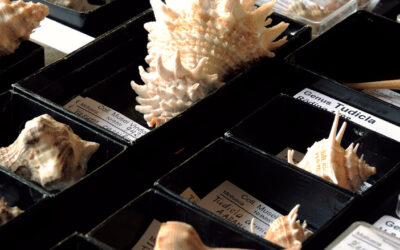
Molluscs
MolluskenDigitale Erschließung prominenter malakologischer Belegsammlungen in Österreich